PRODUCT OVERVIEW
Inmarsat's L-band mobile satellite service splits into two frequency ranges: the downlink from satellite to terminal runs from 1525 to 1559 MHz, while the uplink from terminals to the satellite runs from 1626.5 to 1660.5 MHz.
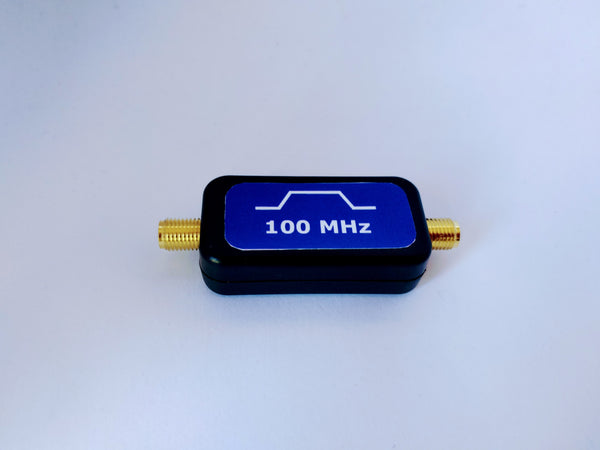
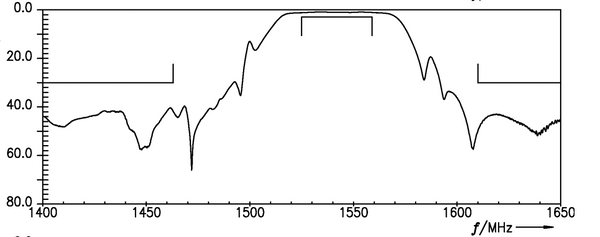
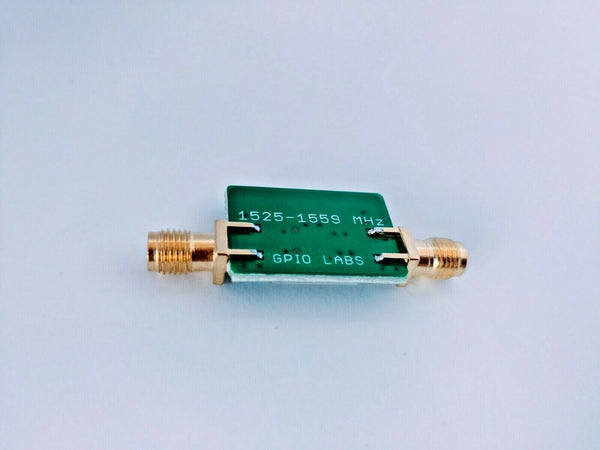
This filter covers the downlink window, centered at 1542 MHz, passing Inmarsat signals arriving from the satellite with less than 3 dB of insertion loss across the full 34 MHz passband.
The 1525 to 1559 MHz downlink carries all inbound satellite traffic to terminals on the ground, at sea, and in the air: Fleet Broadband broadband data, IsatPhone voice and messaging, Inmarsat-C traffic including Global Maritime Distress and Safety System (GMDSS) broadcast and messaging, and aeronautical ACARS and ADS-C data delivered to aircraft via Inmarsat Aero.
An SDR receiver, spectrum analyzer, or monitoring system placed on this band without filtering faces a specific and serious interference risk: GPS L1 sits at 1575.42 MHz, only 16 MHz above the upper passband edge. Any wideband front end will admit that GPS L1 energy alongside the Inmarsat signal. This filter rejects it, along with adjacent Iridium transmissions at 1616 to 1626.5 MHz, cellular, LTE, and ISM-band interference.
Maximum RF input is +19 dBm and the operating range is -40°C to +85°C.
APPLICATIONS
- Reception and monitoring of Inmarsat L-band downlink signals (1525–1559 MHz)
- Fleet Broadband, IsatPhone, Inmarsat-C, and GMDSS receive system front ends
- Aeronautical satellite communications monitoring (ACARS and ADS-C via Inmarsat Aero)
- SDR-based L-band Inmarsat reception requiring rejection of adjacent GPS L1 and Iridium signals
- Spectrum monitoring and analysis of Inmarsat downlink traffic
- Defence and SIGINT receive chains targeting the 1525–1559 MHz mobile satellite service allocation
- Inmarsat terminal development and test bench setups
FILTER PERFORMANCE
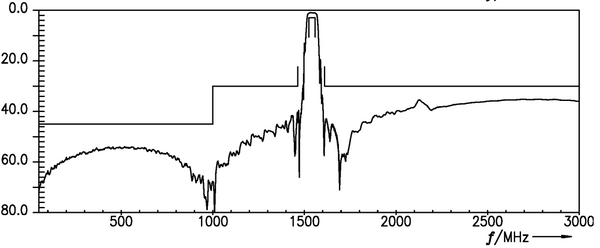
| Frequency | Typical Attenuation |
|---|---|
| 50–900 MHz | >55 dB |
| 900–1400 MHz | >40 dB |
| 1400–1500 MHz | >20 dB |
| 1525–1559 MHz (passband) | <3 dB insertion loss |
| 1575 MHz (GPS L1) | >20 dB |
| 1616–1660 MHz (Iridium / Inmarsat uplink) | >30 dB |
| 1700 MHz and above | >40 dB |
The proximity of GPS L1 at 1575.42 MHz to the upper passband edge (just 16 MHz above 1559 MHz) makes this the most critical rejection region for this filter in practice. The measured rolloff ensures GPS L1 energy is meaningfully attenuated before it reaches your receiver's front end.
NOTES
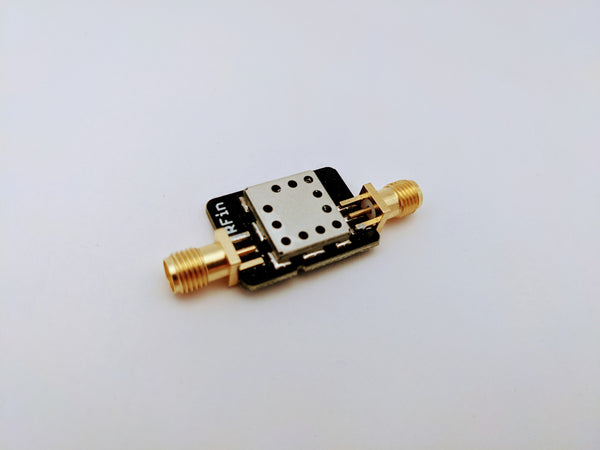
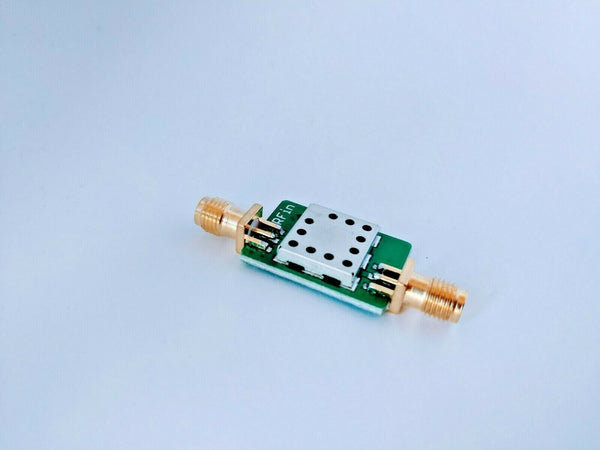
- SMA-F PCB edge mount connectors
- Maximum RF input: +19 dBm
- Maximum DC voltage on input/output port: 6 VDC
- Passive, no power required
- For receive applications, place an LNA ahead of this filter to establish your system noise figure before the filter's insertion loss applies. See our wideband L-band Low Noise Amplifiers for compatible front-end options.
COMPANION PRODUCT
- This filter covers the Inmarsat downlink (satellite to terminal): 1525–1559 MHz
- Uplink companion covers the Inmarsat transmit path (terminal to satellite): Inmarsat L-Band Uplink Bandpass Filter (1626.5–1660.5 MHz)